
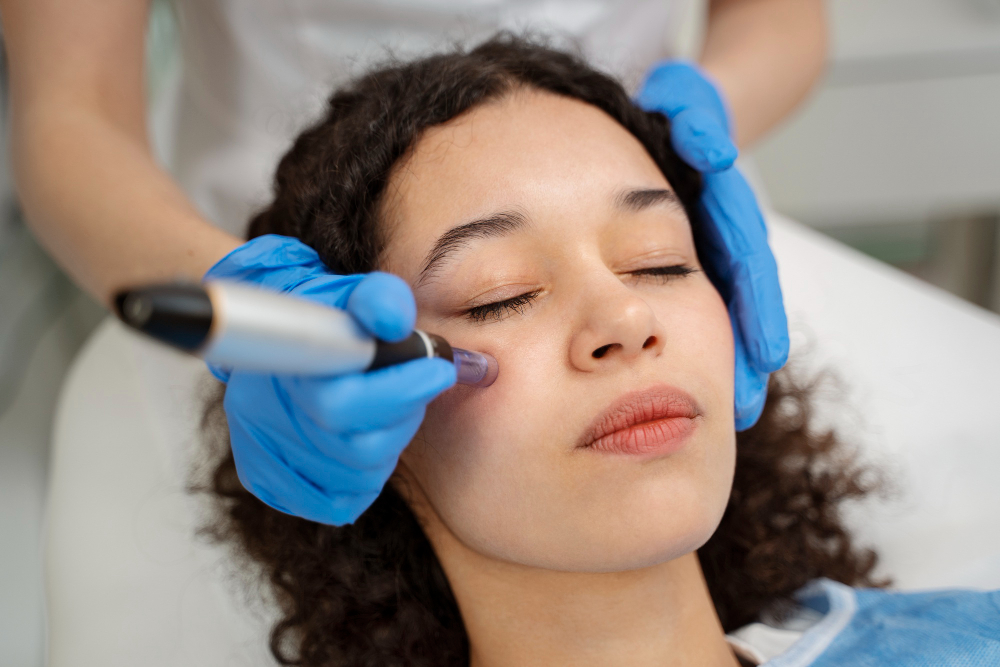
What is Microneedling?
Microneedling is a popular skin treatment that uses tiny needles to help improve skin texture. Many people choose microneedling to reduce scars, wrinkles, and large pores. Because it is minimally invasive, recovery is usually quick. The treatment is also called collagen induction therapy. Most clinics offer microneedling for the face, but it can be used on other body parts too.
How Does Microneedling Work?
During microneedling, a device with fine needles makes small holes in the top layer of your skin. As a result, your body starts to heal these tiny injuries. This process boosts collagen and elastin, which are proteins that keep skin firm and smooth. Over time, you may notice your skin looks fresher and more even. While results can vary, many people see changes after a few sessions.
Benefits of Microneedling
Microneedling offers several benefits for skin health. For example, it can help with:
Because microneedling is safe for most skin types, many people can enjoy these benefits. However, results may depend on your skin and the number of treatments.
Who is a Good Candidate?
Not everyone is a good candidate for microneedling. Still, most healthy adults can try it. You may be a good candidate if you:
Before starting, always talk to a certified dermatologist or cosmetologist. They can help decide if microneedling is right for you.
The Microneedling Procedure: Step-by-Step
The microneedling procedure is simple and usually takes less than an hour. Here is what you can expect:
Most people feel only mild discomfort during the procedure. However, you may notice some redness or swelling afterward.
Potential Risks and Side Effects
Microneedling is generally safe when done by a trained professional. Even so, there are some risks and side effects to consider. These may include:
Although serious problems are rare, you should always follow your provider’s advice. According to the American Academy of Dermatology, infection risk is low when proper care is taken.
Aftercare and Recovery Tips
Proper aftercare helps your skin heal and reduces the risk of side effects. For best results, follow these tips:
Most people recover within a few days. However, always contact your provider if you notice signs of infection, such as pus or severe pain.
Frequently Asked Questions
In summary, microneedling can help improve your skin’s look and feel. However, it is important to choose a certified provider and follow all aftercare steps. For personalized advice on microneedling, consult a certified dermatologist or cosmetologist at The Renewed Skin Clinic.